
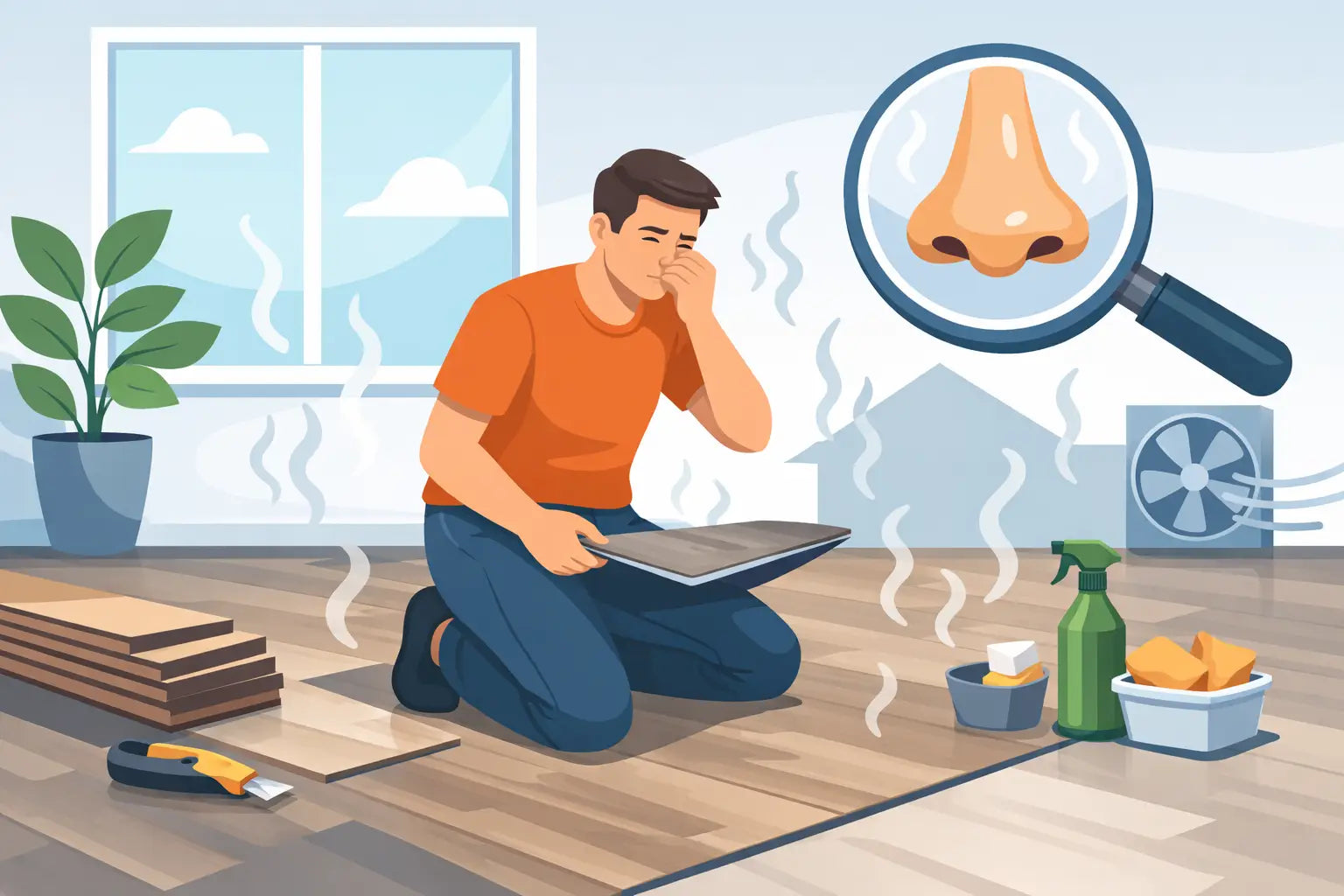
Freshly laid, neatly cut, looking exactly as you wanted it - and then something immediately stands out: The room smells different than expected. This very issue concerns many buyers after purchasing flooring. When it comes to vinyl flooring odor after installation, the most important question is not only whether an odor is present, but where it comes from, how strong it is, and how long it lasts.
First, the good news: A slight odor in the first few days after installation can be quite normal. This is especially true if, in addition to the flooring, adhesive, filler, primer, or other installation products were used. The cause is therefore crucial. Because not every odor automatically comes from the vinyl flooring itself.
Vinyl flooring odor after installation - what is normal?
New flooring often brings with it a typical new smell. Many people are familiar with this from furniture, carpets, or freshly painted walls. With high-quality vinyl flooring, this odor is usually significantly less pronounced than with very inexpensive, less transparent products. Brand-name goods and clearly declared product lines usually offer more security here.
Above all, a slight, initially perceptible odor that gradually diminishes after ventilation is normal. Especially in closed rooms, with little air circulation, or directly after delivery, the impression can be stronger. If the flooring is only removed from its packaging shortly before installation, the odor is additionally concentrated.
Less normal is an intense, pungent, or even persistently strong odor after a longer period. In such cases, it is worth taking a closer look at the entire installation situation. Because often, the actual cause lies not with the flooring, but in the subfloor construction or accessories.
The most common causes of odor after installation
When installing vinyl flooring, more than just the planks are often brought into the room. Especially with glued vinyl, several materials come together that can release odors in the first few days. These include primers, leveling compounds, and especially adhesives. Depending on the product, room size, and ventilation behavior, this can be clearly noticeable.
Even with click vinyl, the flooring is not always solely responsible. If, for example, an old subfloor was used, trapped residual odors can become noticeable again. This happens, for example, with older screeds, not completely dry subfloors, or residues of previous floor coverings. The new flooring is then not the cause, but merely makes an existing problem more visible - or rather, more perceptible by smell.
Another point is the room temperature. The warmer the room, the more intensely odors are often perceived. Directly after installation, in direct sunlight, or in heated rooms, the issue can therefore be more noticeable than a few days later.
Difference between click vinyl and glued vinyl
With click vinyl, a possible odor usually comes from the product itself or from the packaging if the flooring has just been opened. Since no full-surface adhesive is used, the cause is often easier to pinpoint here.
With glued vinyl, the situation is more complex. The installation products used play a greater role here. Especially if the work was done quickly and the room was not adequately ventilated afterwards, the odor will linger longer. This does not automatically mean that something went wrong. But it does show how important coordinated materials and clean workmanship are.
How long does the odor last?
This depends on the material, the room size, and ventilation. A slight odor often disappears significantly within a few days and is barely perceptible after one to two weeks. With glued vinyl or extensive subfloor preparation, it may take a little longer.
If the odor remains intensely strong after two to three weeks, you should investigate more closely. Then it is no longer just a matter of patience, but of a possible cause in the construction. Especially if headaches, irritation, or an unusually chemical odor also occur, attention is required.
Here's the rule: Don't speculate, but proceed systematically. Which products were used? Was the subfloor dry? Was it installed according to manufacturer's instructions? These questions usually bring clarity faster than general assumptions.
What you can concretely do about vinyl flooring odor after installation
The first and most effective step is regular airing out. Several times a day for a few minutes brings significantly more than continuously tilted windows. This way, the room air is exchanged faster without unnecessary moisture remaining in the room.
A uniform, normal room temperature is also helpful. Extreme heat tends to intensify odors. So, don't heat unnecessarily high just to get rid of the odor faster. A constant, comfortable room climate is better.
If there is still packaging material, adhesive residue, or cut flooring pieces in the room, these should be removed immediately. Especially remnants in closed garbage bags or buckets can reinforce the impression that the entire floor smells strongly, even though the actual source is nearby.
For freshly cleaned floors, it is also worth taking a look at the cleaner. Strongly perfumed or unsuitable agents can mask the actual odor and make assessment more difficult. For the first time, gentle cleaning according to the manufacturer's instructions is usually sufficient.
What you should better not do
Fragrance sprays, room air fresheners, or aggressive cleaners are generally not advisable. These do not eliminate the cause, but merely mask it. In the worst case, several odors mix, and the room feels even more unpleasant.
Home remedies are also not always useful. Vinegar, baking soda, or similar tips from the internet do not suit every floor and not every surface. If you want to play it safe, stick to recommended cleaning products and a good indoor climate.
When the odor can be a warning sign
Not every odor is harmless. If the floor smells strong, pungent, or unusually long, it should be checked whether the flooring is really the cause. Problems often arise when products that do not match each other have been combined, or when a subfloor still had residual moisture.
Moisture is a particularly important point. An insufficiently dry screed, in conjunction with adhesives or old residues, can lead to significant odors. In such cases, ventilation only helps to a limited extent, because the problem lies deeper in the construction.
Very inexpensive, unclear goods without verifiable product information are also a risk factor. Those who rely on tested quality, established brands, and transparent product data for floor coverings significantly reduce this risk from the outset. This is precisely why it is worthwhile to look not only at the price per square meter when buying, but also at the origin, processing, and suitable installation products.
How to prevent odor problems even before purchase
The best solution begins not after installation, but before it. When choosing vinyl flooring, you should not only compare decor and usage class, but also pay attention to the quality of the overall system. A good floor only performs convincingly in everyday life if the covering, subfloor preparation, and accessories match.
For click vinyl, this means: sufficient acclimatization, clean storage, and preparing the room. For glued vinyl, it also means: checking the subfloor, using approved adhesives, and adhering to processing times. Especially in renovations, careful planning often saves more trouble than any later attempt at repair.
Those who rely on brand products and coordinated installation accessories are generally safer. This is not only a question of durability, but also of the feeling in the room in the first few days after installation. A floor should look good, be durable, and feel uncomplicated in everyday life - this also includes that it no longer stands out after a short time, neither visually nor by smell.
For whom a query to the dealer or installer is worthwhile
If you have just received or had the flooring installed, direct contact is often the quickest way. A good specialist dealer can assess whether the described odor is within the normal range or whether individual installation products should be checked more closely. This is especially true if you have purchased various components from a single source.
The installer should also be involved if there is uncertainty about the adhesive, the filler, or the subfloor. The more precisely it is documented which materials were used, the easier it is to narrow down the cause. Asking early here saves time and avoids unnecessary experiments in the finished room.
At WaBo Design, such cases demonstrate the importance of accessible, expert advice on flooring and accessories. Especially with vinyl, it's not just the decor that matters, but the interplay of quality, installation method, and careful product selection.
A new floor doesn't have to be completely odorless from the start. The crucial thing is that the odor remains light, noticeably diminishes, and can be well regulated by ventilation. If you choose high-quality products, install them cleanly, and react early to any anomalies, the brief new smell will not become a permanent annoyance - but simply the start of a room that quickly smells like home again.