
- Fachbetrieb seit 2005
- 3 Muster für 19,95 €, beim Kauf angerechnet
- Kauf auf Rechnung
- Gratis-Versand ab 1.000 €




















Mehr über Click vinyl
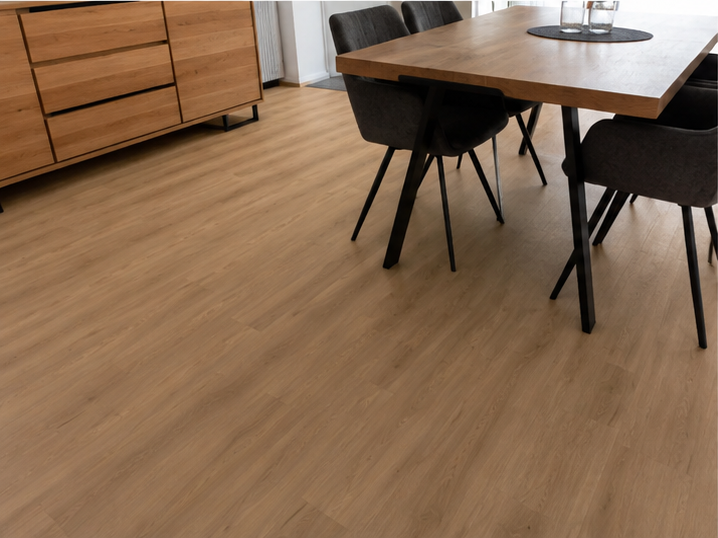
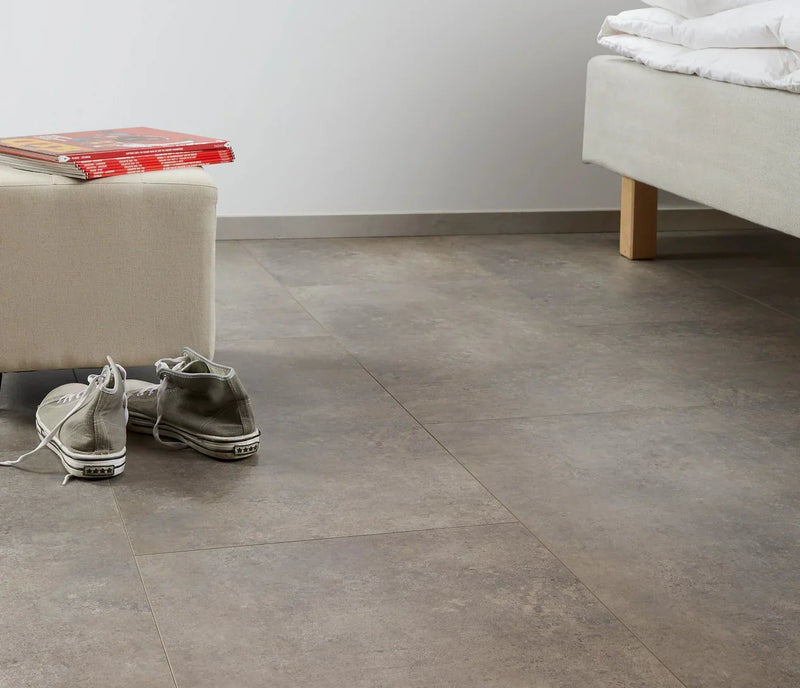
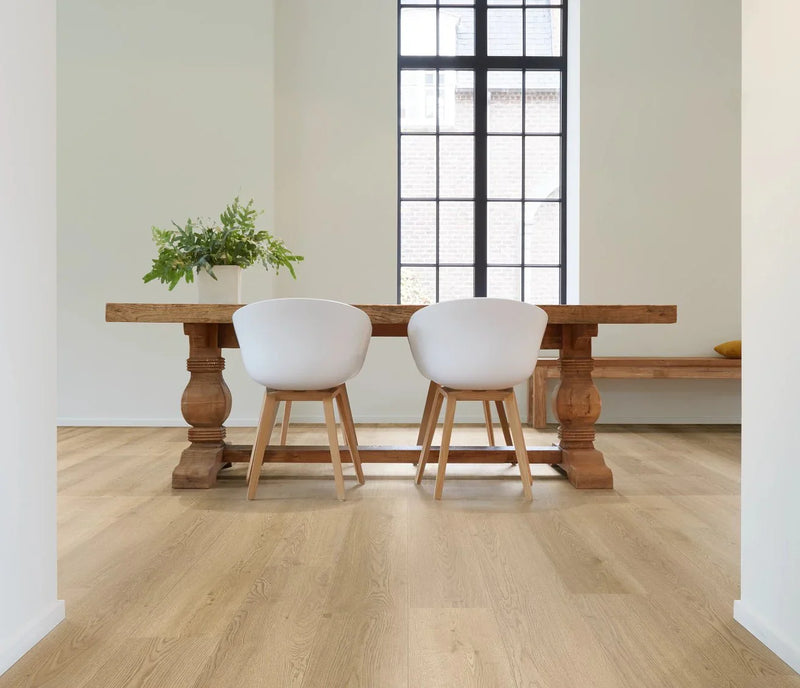
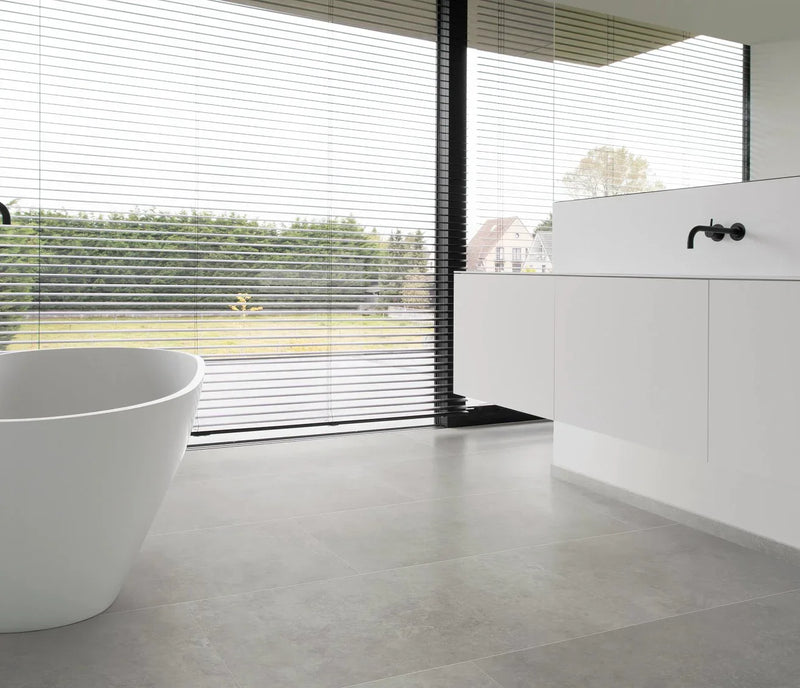
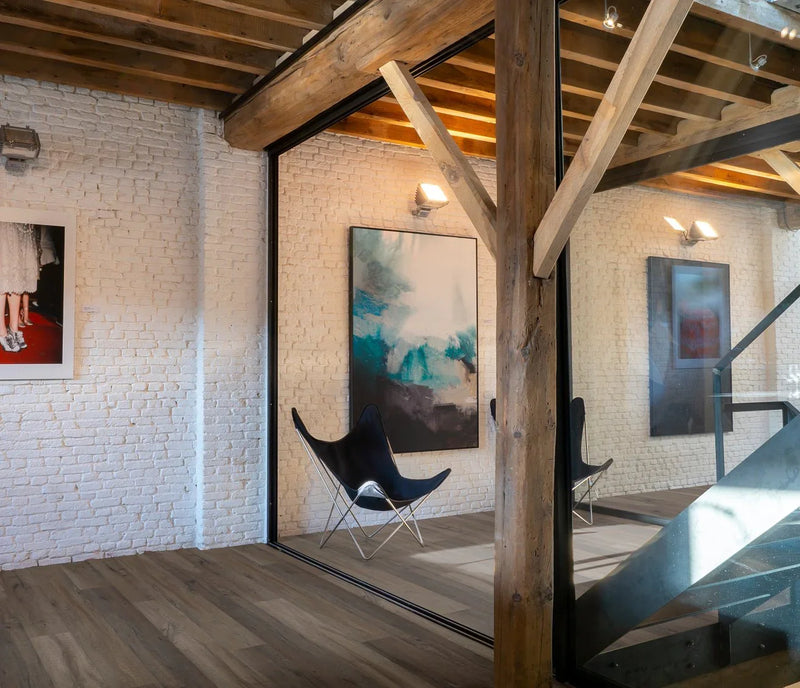
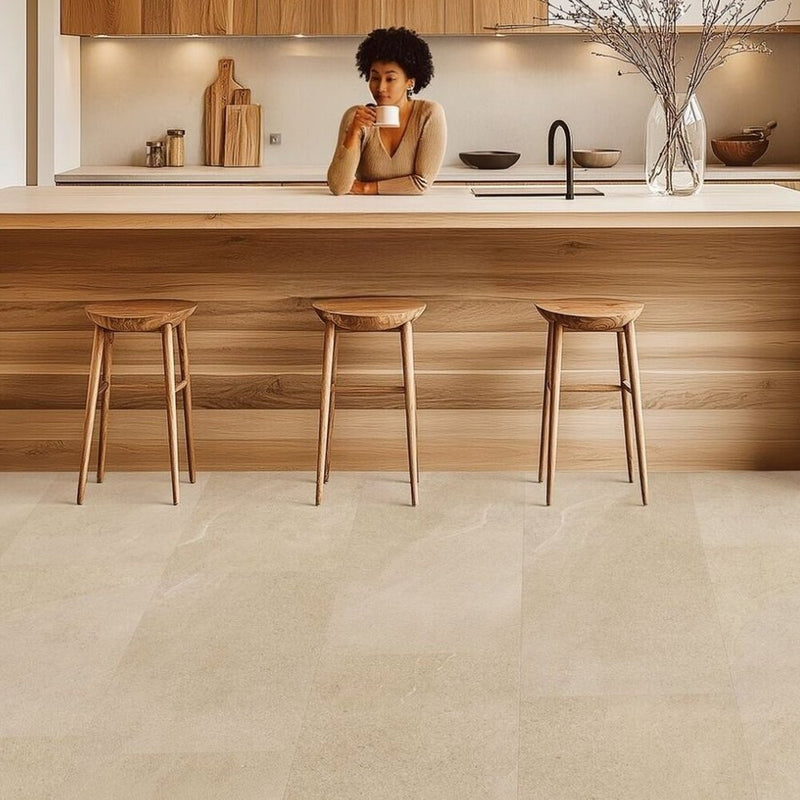
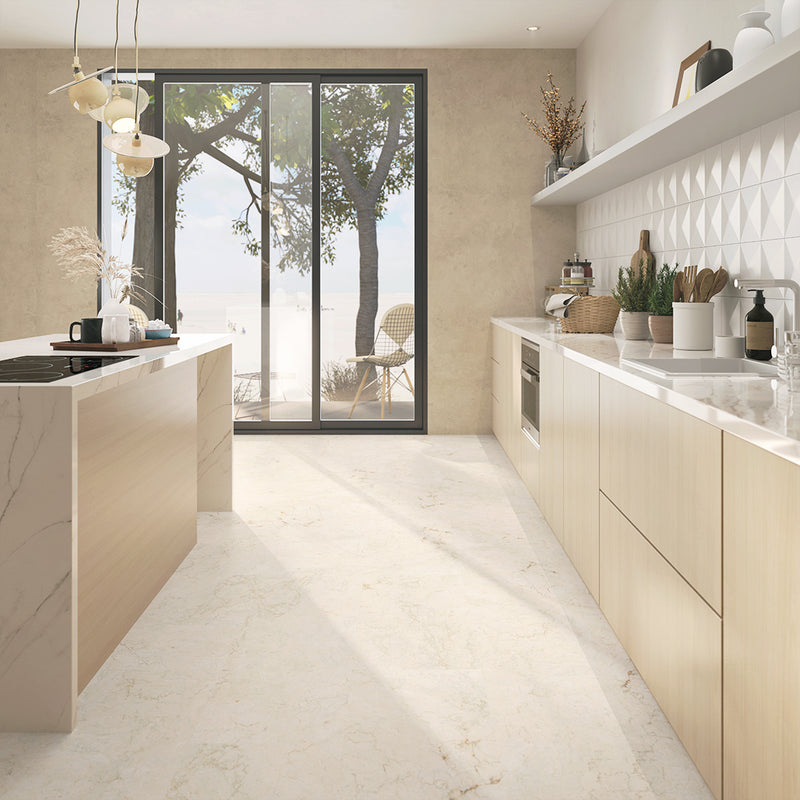
Buying click vinyl: Click vinyl is the straightforward way to a new floor. The planks are installed as a floating floor using a click system, completely without glue, often in just one day. We offer over 900 designs from COREtec, Gerflor, Tarkett, CHECK, IPC, Moduleo, Project Floors, and other brands, with about three-quarters of them featuring integrated impact sound insulation.
- 🎯 Samples conveniently delivered to your home: 3 for €19.95; the amount is credited toward your purchase.
- 💬 Personal advice from a specialist company.
- 🚚 Fast shipping via freight carrier with plannable delivery.
What is click vinyl?
Click vinyl is a vinyl floor (design floor) whose planks or tiles have a click profile on the edges. You snap them together instead of gluing them. The floor lies floating on the subfloor: it is not connected to it, as the planks only hold onto each other. This is why it is installed quickly and can be removed later.
There are two types of construction. Rigid vinyl has a rigid core, usually SPC made of stone powder and plastic. It is dimensionally stable and bridges small uneven spots; we carry a good 750 of these out of over 900 click floor options. Flexible click vinyl has an elastic core and is pliable. All floors with a rigid core are grouped under Rigid Vinyl.
When click vinyl is the right choice
- You are installing it yourself: No glue, no drying time, no special tools. A room of 20 m² is doable in one day for experienced DIY enthusiasts.
- You are renting: The floor can be removed without residue and taken with you.
- The subfloor is not perfect: A floating floor is more forgiving of minor unevenness than full-surface gluing.
- You want it to be quiet: Many designs come with impact sound insulation factory-fitted, so you don't need a separate underlay.
- You need it to be fast: After the last click, the floor is immediately walkable; you don't have to wait for anything to cure.
What you should look out for when buying
- Wear layer: From 0.3 mm is sufficient for normal living spaces; for hallways, kitchens, or home offices with caster chairs, we recommend 0.55 mm. More than half of our click floors have a 0.55 mm layer. The differences are explained in our guide Vinyl Wear Layer Explained.
- Usage class: This indicates how much wear a floor can withstand. Whether class 33 is worth it is explained in the guide Usage Class 33.
- Integrated insulation: If your floor has factory-fitted insulation, do not put an additional underlay underneath it, as this makes the connection too soft.
- Look and format: From country-style planks to oak and herringbone to stone and tile effects.
Installing click vinyl: subfloor, edge spacing, preparation
The subfloor must be level, solid, and dry. Even out any unevenness of more than 2 mm over 1 m with leveling compound; otherwise, the click connection will work and the joints will open over time. On screed, a vapor barrier is usually placed underneath.
Let the packages sit in the installation room for 24 to 48 hours at a room temperature of 18 to 24 °C beforehand. Maintain an edge distance of 5 to 10 mm from the wall; in large rooms and with underfloor heating, lean towards 8 to 10 mm. The manufacturer's installation instructions are decisive. For cutting waste, 5 to 10% is usually sufficient. How to plan the joints is described in the guide Planning Edge Gaps for Click Vinyl, and typical pitfalls are covered in The 8 Most Common Installation Mistakes.
Click vinyl on underfloor heating and in rental apartments
You can generally install click vinyl on hot-water underfloor heating. Pay attention to the manufacturer's approval and a low thermal resistance of the total construction; details can be found in the guide Click Vinyl for Underfloor Heating. In a rental apartment, click vinyl scores points because you can remove it when you move out. What you need to watch out for is in the guide Click Vinyl in Rental Apartments. And if you want to install continuously across multiple rooms without transition strips, check out Click Vinyl Without Transition Strips.
Click or glue, which fits your project?
Our guide Click Vinyl or Glue-Down Vinyl compares both honestly. If your subfloor needs leveling anyway, glue-down vinyl is often worth it. Or find your floor in 60 seconds with our buying advisor.
Frequently asked questions about click vinyl
What is the difference between click vinyl and glue-down vinyl?
Click vinyl is installed as a floating floor, with the planks locking into each other without glue. It is fast, DIY-friendly, and can be removed without residue, making it ideal for rental apartments. Glue-down vinyl is bonded to the entire surface, has a lower profile, and is the classic choice for underfloor heating and large areas.
Can I install click vinyl myself?
Yes, that is its great advantage. You don't need glue, just a utility knife, spacers, and a bit of patience. A 20 m² room is achievable in one day for experienced DIYers. The subfloor must be level, solid, and dry.
How much does good click vinyl cost per m²?
With us, click vinyl currently ranges between roughly €22 and €83 per m², with most floors costing between €32 and €60. The price depends primarily on the brand, wear layer, and core. For normal living spaces, a wear layer starting at 0.3 mm is sufficient; for hallways, kitchens, and heavy use, we recommend 0.55 mm.
Is click vinyl suitable for underfloor heating?
Generally yes, for hot-water underfloor heating. Check the manufacturer's approval in the product data and ensure a low thermal resistance for the entire assembly. When using underfloor heating, keep the edge gap closer to 8 to 10 mm.
Do I need an underlay under click vinyl?
Only if the floor does not have integrated insulation. In that case, use a pressure-resistant underlay, not a soft one. On screed, an additional vapor barrier is required. If your vinyl already has factory insulation, do not add anything between them. About three-quarters of our click floors already have the insulation integrated.
How much edge space does click vinyl need?
5 to 10 mm; in large rooms and with underfloor heating, aim for 8 to 10 mm. The manufacturer's installation instructions are the authority. You can cover the gap later with baseboards.