
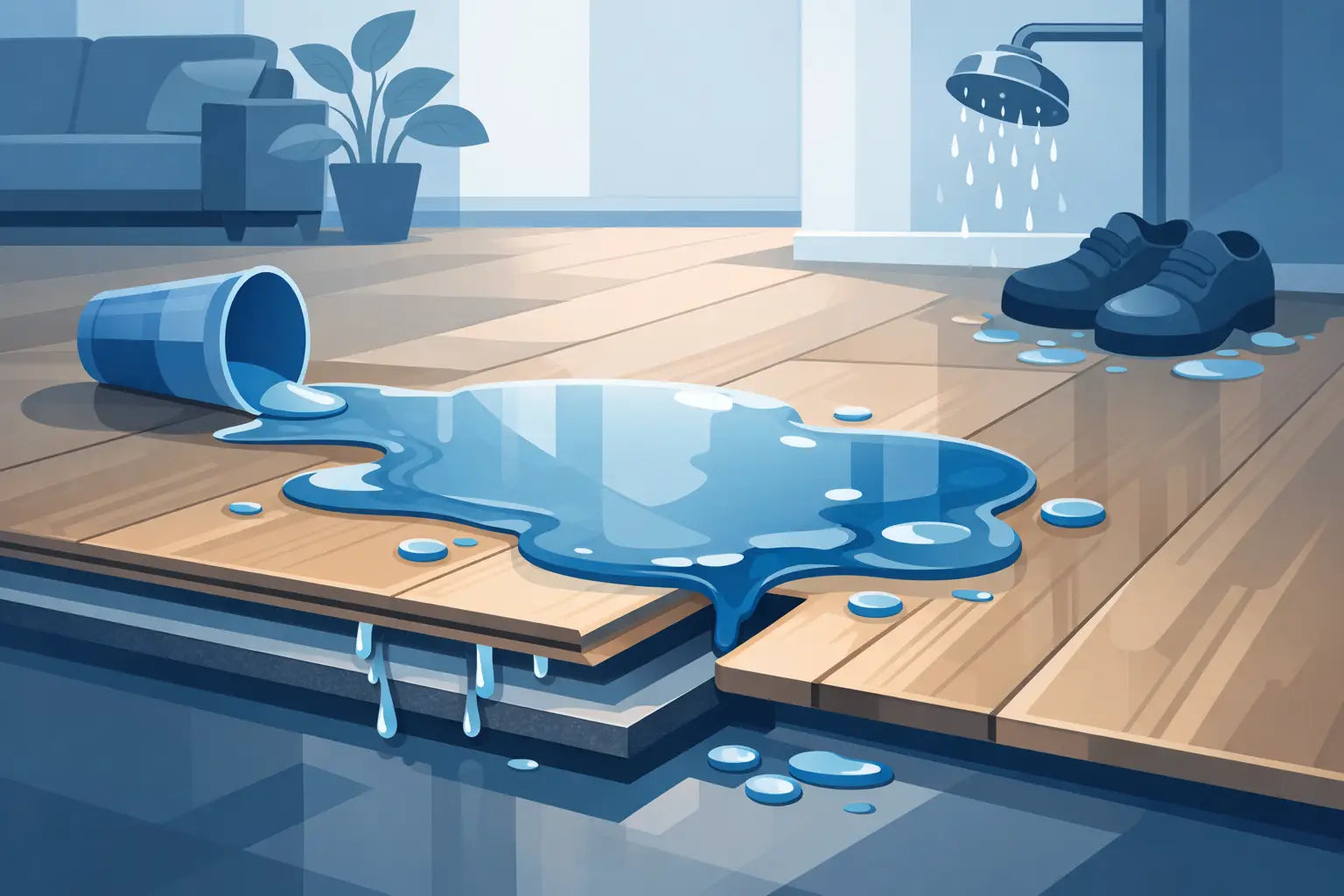
An overturned glass of water in the kitchen, wet shoes in the hallway, splashing water in the bathroom - it's precisely in such moments that the question arises: Is vinyl flooring waterproof in everyday life or does it only tolerate a little moisture? For many buyers, this is not a minor detail, but a real deciding factor. Those who are renovating want a floor that looks good, remains easy to care for, and doesn't cause problems at the first mishap.
Is Vinyl Flooring Waterproof in Everyday Life - The Short Answer
Yes, vinyl flooring is generally very moisture-resistant in everyday life and often waterproof. But there is a difference between the surface of the material and the complete floor structure. The wear layer and the vinyl core itself are usually insensitive to water. It becomes critical where water gets into joints, edge areas, or the subfloor.
This is precisely why it's not just about the material, but also the installation method. Glued vinyl behaves differently from click vinyl, and a bathroom has different requirements than a living room or bedroom. Those who clearly differentiate this will ultimately make a better purchase decision.
What "Waterproof" Really Means for Vinyl Flooring
In sales, vinyl flooring is often described as water-resistant or waterproof. This is generally true but can be misunderstood. It usually means that the material itself does not swell due to moisture like classic laminate or many wooden floors. If water stands on the surface and is removed promptly, vinyl flooring usually suffers no damage.
However, this does not automatically mean that every vinyl floor is suitable for every wet situation. A floor can be insensitive to water and still develop problems if water continuously gets under the planks. Especially with click systems, the connections are stable, but not always completely sealed against standing water.
For everyday life, the distinction is simple: splashes, damp mopping, wet shoe soles, or small puddles are usually not a problem. Permanent wetness, leaky connections, or water that unnoticed gets under the floor are something else.
Click Vinyl or Glued Vinyl - What Are the Differences?
Click Vinyl in Family Everyday Life
Click vinyl is popular because it can be installed relatively quickly and is well suited for renovations. In everyday life, it handles a lot. If children run through the bathroom after showering or rainwater lands on the floor in the entrance area, the surface usually remains unimpressed.
The potential weak points are the joints and edge connections. High-quality systems are very precisely fitting, but standing water should not remain on the floor for hours. If moisture penetrates the connections or accumulates at the edge, it can damage the subfloor in the long run. The covering itself often remains stable, but underneath it can become critical.
Glued Vinyl Often Has an Advantage in Moisture
Glued vinyl is fully adhered to the prepared subfloor. This means there are fewer cavities where water can penetrate. In rooms with higher moisture exposure, this is often the safer solution - provided that the subfloor, adhesive, and workmanship are suitable.
Therefore, glued vinyl is often preferred in kitchens, utility rooms, or guest bathrooms. It lies flat, feels quiet underfoot, and offers less surface for moisture to attack. The installation effort is higher, but the result is often particularly resilient in everyday life.
Which Rooms Are Uncritical - and Where Should You Look More Closely?
In living areas, vinyl flooring is usually a very relaxed solution. Living rooms, bedrooms, children's rooms, and hallways rarely present it with real moisture problems. Even in the kitchen, vinyl flooring is a good choice for many households because splashes, dropped ice cubes, or water near the sink area are usually not a drama.
In the bathroom, it depends more on the product and the execution. A guest toilet is usually uncomplicated. In a family bathroom with daily showering, wet bath mats, and a lot of splashing water, installation and edge sealing should be carefully planned. Those who want to be on the safe side here should not only look at the decor or the price per square meter, but also at the suitability for wet rooms and the technical construction of the floor.
In laundry rooms or entrance areas with a lot of dirt and wetness, vinyl flooring also shows its strengths. It is only important that water does not remain standing permanently and that doormats or regular wiping additionally relieve the floor.
What Can Vinyl Flooring Really Withstand in Everyday Life?
Those looking for a floor for real life rarely think about laboratory values. What matters is what happens in the morning before work, on the weekend with visitors, or after a rainy day. This is exactly where vinyl flooring scores significantly.
Wet dog paws, spilled coffee, an overturned water bowl, or damp mopping are typical stresses that a good vinyl floor handles without problems. Unlike more sensitive coverings, it usually shows neither swelling nor warping with short-term moisture. Visually, the surface also usually remains stable.
Nevertheless: everyday usability does not mean invulnerable. If water stands in joints for a long time, a flower pot leaks unnoticed, or moisture gets under the floor after a defect in the sink or washing machine, even vinyl flooring needs a quick reaction. The material itself is not the main problem then, but what happens underneath.
How to Recognize Suitable Vinyl Flooring
When choosing vinyl flooring specifically for rooms exposed to moisture, you should not only pay attention to the term "water-resistant." A few tangible criteria are more important. These include the installation method, the overall height, the quality of the click connection, and the manufacturer's approval for specific application areas.
For branded products, it is usually clearly described whether the floor is intended for the kitchen, bathroom, or only for dry living areas. This reduces uncertainty and protects against bad purchases. The wear layer also plays a role if, in addition to moisture, scratches, chair casters, or high everyday stress are an issue.
For renovators and craftsmen, the subfloor is also important. Even the best vinyl floor is of little help if the underlying structure is not suitable. An insufficiently prepared screed, residual moisture, or unclean edge areas can significantly worsen moisture resistance in everyday life.
Care and Cleaning - So That Waterproof Remains Suitable for Everyday Use
Vinyl flooring is easy to care for, but not maintenance-free. That's exactly what makes it so attractive to many households. Remove loose dirt, wipe with a damp cloth, and you're done. Aggressive cleaners or too much water are usually not necessary.
If liquids are spilled, quick wiping is the best routine. Not because the floor is immediately damaged, but because moisture cannot accumulate in critical areas in the first place. This applies particularly to click vinyl and at transitions to walls, showers, or door thresholds.
Those who want to enjoy their floor for a long time should also pay attention to clean walk-off zones in the entrance area and felt glides under furniture. While this is not directly related to water resistance, it significantly increases everyday usability.
For Whom Vinyl Flooring is a Good Choice for Moisture
Vinyl flooring is very well suited for households where the floor has to endure a lot. Families with children, pet owners, renovators with tight schedules, and landlords looking for an easy-care solution particularly benefit from its high moisture insensitivity.
This is also relevant for price-conscious buyers. Those who make a careful choice once often save themselves trouble later with sensitive floors. It is only important not to lump every product together. There are noticeable differences between inexpensive promotional goods and high-quality branded flooring in terms of connection technology, resilience, and room suitability.
A specialized dealer like WaBo Design can help here because not only decors, but also installation methods, brands, and accessories are perfectly coordinated. This is particularly useful when the floor in the kitchen, bathroom, or hallway should not only look good but also function reliably in everyday life.
The Honest Answer to the Question of Waterproofing
If you're wondering if vinyl flooring is suitable for real life, the honest answer is: mostly yes, but not without limits. The surface and the material itself are very well suited for normal moisture contact. This is one of the big advantages over many other floor coverings.
Ultimately, what matters is what your everyday life looks like. For occasional puddles, damp mopping, and splashing water, vinyl flooring is a strong, practical solution. If a room regularly gets very wet or water can stand for a longer time, the product selection should be made more carefully - ideally with a view to the installation method, manufacturer's approval, and a clean subfloor.
Those who consider these points will not get a sensitive compromise, but a floor that does exactly what it should in everyday life: look good, require little work, and remain calm even when life is not always dry.