
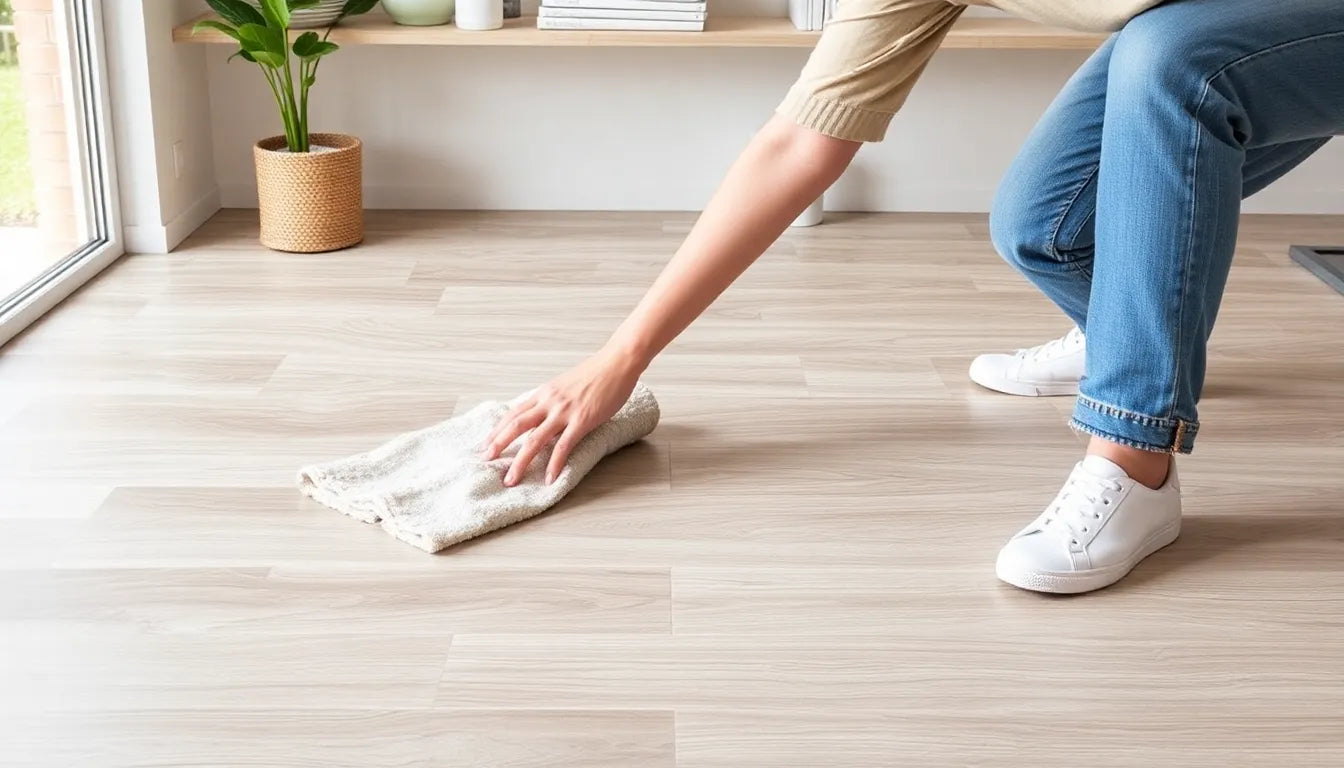
Cleaning and maintaining vinyl flooring is incredibly easy – if you know a few basic rules. Regular vacuuming, damp mopping, immediate stain removal, and avoiding harsh cleaning agents: This will keep your floor attractive, hygienic, and valuable for many years. In this guide, we show you step-by-step how to keep your vinyl or design floor properly clean, which cleaning products and home remedies are suitable, and which common mistakes you should avoid.
The most important things in brief
- Daily: Remove dust and sand with a soft broom, microfiber mop, or vacuum cleaner – loose grains act like sandpaper.
- Weekly: Mop only damp with a well-wrung mop and a pH-neutral cleaner.
- Never: Use steam cleaners, hot water, abrasive cleaners, bleach, or floor wax.
- Stains: always treat immediately – the longer they set, the more stubborn they become.
- Prevention: Felt glides under furniture, doormats at entrances, sun protection on large windows.
Table of Contents
- Why vinyl flooring needs the right care
- Cleaning vinyl flooring: the right routine
- Initial cleaning after installation
- Which cleaning products are suitable?
- Cleaning vinyl flooring with home remedies
- Removing stains – by stain type
- Preventing scratches, pressure marks and sun damage
- Seasonal care at a glance
- The most common care misconceptions
- Frequently asked questions about vinyl floor care
- Conclusion
Why vinyl flooring needs the right care
Thanks to its modern surface coating, vinyl is hard-wearing, water-resistant, and easy to maintain. Nevertheless, it is a thermoplastic material that reacts to heat and UV radiation: In strong sunlight, the material expands, and in cold temperatures, it contracts. Without proper care, the wear layer can become dull or discolored over time. The good news: With a few simple habits – removing loose particles, damp mopping, using gentle agents, and avoiding extreme heat – you can reliably protect your floor.
Incidentally, the installation method also plays a role: Click vinyl is laid floating and reacts more sensitively to penetrating water at the joints, while fully glued adhesive vinyl forms a particularly dense, stable structure. You can find out which variant suits you best in our comparison Click vinyl or adhesive vinyl?
Cleaning vinyl flooring: the right routine
For a permanently beautiful floor, a combination of daily dry cleaning and weekly damp mopping is sufficient.
Daily dry cleaning
Dust, grains of sand, and small stones act like sandpaper if they are not removed in time. Therefore, vacuum or sweep your floor daily – ideally with a soft broom or a brush nozzle that protects the surface. A flat microfiber mop also reliably picks up loose particles. A robot vacuum cleaner keeps joints and grooves clean incidentally.
Weekly damp mopping
Once a week, follow with damp mopping. Here's how:
- Dampen the mop with a pH-neutral or special vinyl cleaner and wring it out thoroughly so that only a fine film of moisture remains.
- Mop in sections, always pulling the mop towards you – this avoids streaks and picks up dirt.
- If necessary, wipe with clean water afterwards to prevent cleaning residues that could later form stains.
Important: Too much water, hot water, or a steam cleaner will damage the flooring – moisture can penetrate the joints and cause click vinyl to swell.
Initial cleaning after installation
Immediately after installation, dust and adhesive residue from the installation often remain. Careful initial care ensures that the protective layer stabilizes:
- Remove loose dirt with a vacuum cleaner or soft broom.
- Prepare a solution of lukewarm water and a special vinyl cleaner.
- Clean in small sections with a well-wrung microfiber mop, removing sticky residue with a soft cloth.
- Finally, stick felt glides under furniture and protect heavily used areas with mats – this prevents scratches from the start.
Just installed? Then also read our guide Installing vinyl flooring: DIY or professional?
Which cleaning products are suitable?
Not every cleaning product is suitable for vinyl. Special vinyl cleaners clean gently and preserve the protective polyurethane layer. pH-neutral all-purpose cleaners are also a good choice. For uncomplicated complete care, we recommend our Dr. Schutz cleaning set for design floors – it combines the PU cleaner for daily care and the Elatex stain remover for immediate help.
| ✅ Suitable | ❌ Avoid |
|---|---|
| Special vinyl/PU cleaners | Solvent-based cleaners |
| pH-neutral all-purpose cleaners | Scouring agents & scouring milk |
| Highly diluted vinegar (1:10) | Bleach & chlorine cleaners |
| Baking soda paste for stains | Fabric softener & floor wax |
| Microfiber mop & soft cloths | Steam cleaner & hot water |
Always test new products on an inconspicuous area first before mopping the entire room with them.
Cleaning vinyl flooring with home remedies
Many home remedies are inexpensive and environmentally friendly:
- Vinegar water (1:10): disinfects and neutralizes odors. Afterwards, wipe with clean water to prevent vinegar residue from remaining.
- Lemon water: dissolves grease and provides a fresh scent.
- Baking soda paste: ideal for localized stains – leave to act briefly, then wipe off with a damp cloth.
- Mild natural soap (e.g., Castile soap): sparingly dosed as a gentle all-purpose cleaner.
Here too, apply in a hidden spot first – too high concentrations can dull the surface.
Removing stains – by stain type
Treat stains as soon as possible and always work with a soft cloth and no pressure to avoid scratches.
| Stain type | How to do it |
|---|---|
| Grease & Oil | Apply special stain remover (e.g., Elatex) sparingly, let sit briefly, wipe off |
| Paint & Adhesive residue | Dissolve with basic cleaner or mild spirit cleaner |
| Coffee, tea, juice | Immediately blot with a damp cloth and pH-neutral cleaner |
| Dried-in stains | Apply baking soda paste, let sit, wipe off gently |
Preventing scratches, pressure marks and sun damage
- Felt glides under furniture: Felt or Teflon glides on chair and table legs prevent scratches and pressure marks.
- Correct castors: Use castors suitable for hard floors for office chairs.
- Lift instead of slide: Lift heavy furniture, do not drag it across the floor.
- Doormats: Lay mats at entrances to catch dirt and moisture.
- Sun protection: Blinds, curtains, or sun protection films protect against UV discoloration. For rooms with floor-to-ceiling glazing, dimensionally stable rigid or adhesive vinyl is often the better choice.
Seasonal care at a glance
- Spring: Thoroughly remove road salt residue, replace worn felt glides and doormats.
- Summer: Ventilate regularly, use sun protection so the floor doesn't get too hot.
- Autumn: Wipe up leaves and moisture more frequently, pay attention to dry shoe soles.
- Winter: Provide shoe scrapers, remove snow and salt quickly, clean more often with pH-neutral cleaner.
The most common care misconceptions
"Steam cleaners are more thorough." Hot steam destroys the polyurethane layer and can loosen click connections. Damp mopping is completely sufficient.
"Floor wax brings shine." Vinyl has a factory-applied coating. Waxes leave streaks and make the floor slippery.
"Vinegar is taboo." In the right dosage (1:10), vinegar is an effective home remedy – the important thing is to wipe it off with clear water afterwards.
"More is better." Overdosing cleaning agents leads to greasy films and attracts dirt. Stick to the dosage instructions.
Frequently asked questions about vinyl floor care
How do I clean vinyl flooring properly?
Vacuum or sweep daily, and once a week mop with a well-wrung mop and pH-neutral cleaner. Avoid steam cleaners, hot water, and abrasive cleaners.
Can I wet mop vinyl flooring?
Only damp. Standing or hot water, especially with click vinyl, can penetrate the joints and cause the floor to swell.
Which home remedies are suitable for vinyl flooring?
Highly diluted vinegar (1:10), lemon water, and baking soda paste for stains. Always wipe with clear water afterwards and test in an inconspicuous area beforehand.
Can I use a steam cleaner?
No. The hot steam attacks the protective layer and can loosen click connections. Damp mopping is the right choice.
How do I remove stubborn stains?
Grease and oil with special stain remover, paint and adhesive residue with a mild basic cleaner. Treat dried-in stains with baking soda paste – always with a soft cloth and without pressure.
Conclusion
Caring for vinyl flooring is straightforward if you follow a few basic rules: regular vacuuming, damp mopping with mild cleaners, immediate stain removal, and taking appropriate protective measures. It's best to completely avoid aggressive chemicals, excessive water, and heat. This way, your vinyl floor will remain attractive, hygienic, and valuable for many years.
Are you planning a new floor? Discover our waterproof design floors in click vinyl and adhesive vinyl – or order your free sample conveniently to your home in advance.