
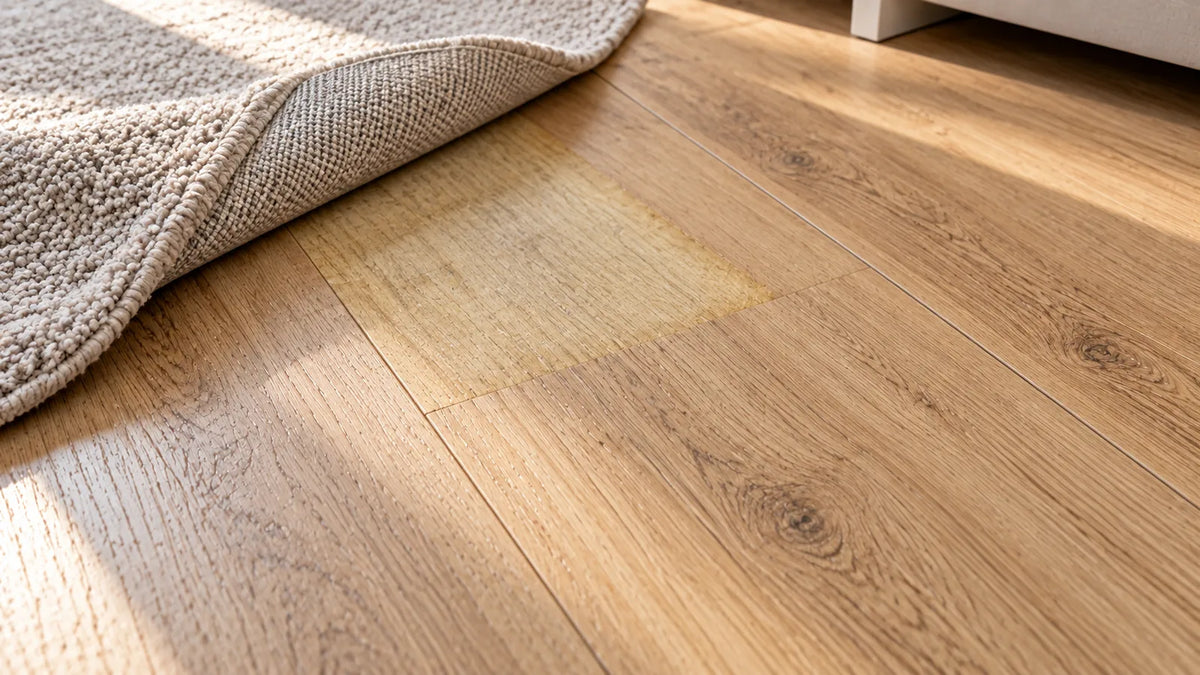
Trying to remove a vinyl floor discoloration sounds like a hopeless case at first. Can a yellow stain under a rug or by the window really be removed, or is it there forever? In most cases, the answer is yes, provided you know the cause and react quickly. As vinyl flooring specialists, we explain where discolorations come from, which household remedies you can use to get rid of them, and how to prevent them permanently thereafter.
- The most common cause of yellow stains is plasticizer migration from rugs, rubber mats, or furniture feet.
- UV light from constant exposure to sunlight also causes vinyl flooring to darken or yellow.
- Fresh discolorations can often be removed with warm water, a mild cleaner, and a bit of patience.
- Aggressive agents like solvents or scouring milk damage the wear layer and make it worse.
- Prevention is easier than removal: felt gliders, light-colored rugs, and curtains protect your floor permanently.
- Why does vinyl flooring discolor in the first place?
- Yellow stains from rugs and rubber: Recognizing plasticizer migration
- Discoloration from sunlight: Preventing UV yellowing
- Removing vinyl floor discoloration: Step by step
- Overview of the right products for discoloration
- When a discoloration can no longer be removed
- Permanently preventing discolorations: 5 tips
- Frequently Asked Questions
- Conclusion
Why does vinyl flooring discolor in the first place?
Vinyl flooring almost always discolors due to a chemical reaction in the wear layer, not because of dirt. The three most common triggers are plasticizer migration from rubber or latex, UV light, and intense heat, such as from underfloor heating or direct sunlight. Aggressive cleaning agents also attack the surface and leave behind a dull, discolored haze over time. Important to know: a discoloration is not damage to the backing layer. In most cases, the floor remains fully functional, only the appearance suffers.
Yellow stains from rugs and rubber: Recognizing plasticizer migration
By far the most common reason for yellow vinyl floor discoloration is so-called plasticizer migration. Rubber furniture feet, latex rug backings, and some sneaker soles contain plasticizers that migrate into the wear layer of your vinyl floor. The result is a yellowish to brownish stain exactly at the point of contact, often only visible after weeks or months. Typical triggers are:
- Rugs and runners with rubber or latex backings
- Furniture feet and casters made of black or dark rubber
- Doormats with PVC or rubber undersides
- Rubber pads under yoga mats or play rugs
Plasticizer migration can be recognized by the sharply defined shape of the stain, which traces the exact contact area of the object. Remove the source as soon as possible, and the migration will stop, even if the existing stain still needs to be treated.
Discoloration from sunlight: Preventing UV yellowing
Direct sunlight over the years causes vinyl flooring to darken or yellow unevenly, especially with light oak-look decors. Unlike with plasticizer migration, this does not create a sharp stain contour, but rather a gradual transition between sunny and covered areas, such as under a rug or piece of furniture. This type of discoloration can hardly be reversed by cleaning because it changes the structure of the wear layer itself. Prevention works best with UV-protective window film, curtains on sunny afternoons, or a light-colored rug that covers the area evenly.
Removing vinyl floor discoloration: Step by step
For fresh discoloration caused by plasticizers or light deposits, the following sequence helps:
- Dry cleaning: Vacuum or sweep the area so that no dirt is rubbed in.
- Lukewarm water with a mild cleaner: Mix a pH-neutral cleaner approved for vinyl flooring in the ratio recommended by the manufacturer.
- Let soak gently: Treat in a circular motion with a soft microfiber cloth; do not scrub.
- For stubborn stains: Test a mixture of water and a little dish soap, always in an inconspicuous area first.
- Wipe dry: Remove all moisture so that no new haze forms.
For stubborn cases, expect to perform multiple rounds over one to two weeks. Impatience and too much pressure usually only make the result worse.
Overview of the right products for discoloration
Not every household remedy is suitable for vinyl flooring. This overview shows what works and what you should avoid:
| Cause | Identifying feature | Immediate action | Prevention |
|---|---|---|---|
| Plasticizer migration (rug, rubber) | Sharply defined yellow-brown stain | Remove source, treat with mild cleaner | Felt gliders, rugs without rubber backings |
| UV light from the sun | Gradual, extensive color difference | Hardly reversible, cover affected area | UV-protection film, curtains, blinds |
| Heat, underfloor heating | Slight darkening, often extensive | Lower flow temperature per manufacturer instructions | Observe recommended maximum temperature |
| Aggressive cleaning agents | Dull, milky haze | Remove residues with clean water | Only use pH-neutral vinyl cleaners |
When a discoloration can no longer be removed
Some discolorations cannot be fixed by cleaning alone because they have chemically altered the wear layer rather than just lying on the surface. This primarily affects long-term plasticizer stains, extensive UV yellowing, and heat damage caused by permanently excessive underfloor heating temperatures. In these cases, often only replacing the affected plank remains. With click vinyl, this is usually easy to do yourself; for glue-down vinyl, a specialist company is recommended. A sample in your current decor helps you order a matching replacement plank.
Permanently preventing discolorations: 5 tips
- Attach felt gliders instead of rubber feet under every piece of furniture.
- Choose rugs without latex or rubber backings or use a textile underlay.
- Protect windows with UV-protective film or curtains against constant sun.
- Operate underfloor heating according to manufacturer instructions, never permanently at maximum.
- Use only pH-neutral cleaners; more on this in our guide to cleaning and care.
If you look for a robust wear layer when buying, you will have an easier time later. In our COREtec range, you will find vinyl floors with an especially resistant surface.
Frequently Asked Questions
Why does vinyl flooring discolor in the first place?
Usually due to plasticizers from rubber or rug backings, UV light, or heat. All three causes change the wear layer chemically, not just on the surface.
Vinyl flooring is discolored, what to do?
First, remove the source, i.e., move furniture, rugs, or mats. Then treat the area with lukewarm water and a mild cleaner suitable for vinyl flooring.
Why does vinyl flooring discolor from rugs?
Rugs with rubber or latex backings release plasticizers that migrate into the wear layer. Over time, this creates a yellowish stain exactly at the contact surface.
Can sunlight turn vinyl flooring yellow?
Yes, permanent direct sunlight causes vinyl flooring to darken or yellow unevenly. This type of discoloration can hardly be reversed by cleaning.
How do I remove yellow stains from vinyl flooring?
With lukewarm water, a pH-neutral cleaner, and a soft microfiber cloth, using a circular motion and no pressure. Avoid aggressive agents like solvents or scouring milk.
How long does it take for a discoloration to disappear?
Fresh, light discolorations often disappear after just one cleaning round. Stubborn cases require multiple rounds over one to two weeks.
Conclusion
Trying to remove a vinyl floor discoloration is realistic in most cases as long as you know the cause and work with the right remedy instead of harsh chemicals. Plasticizer migration from rugs and rubber can almost always be stopped and treated, while UV yellowing is difficult to reverse. Most important is prevention: felt gliders, the right rugs, and a bit of sun protection save you the most work from the start. For further care tips and repairs, also take a look at our guide on removing scratches and repairing pressure marks.
Are you looking for a robust vinyl floor that prevents discolorations from the start?
Discover vinyl floors now