
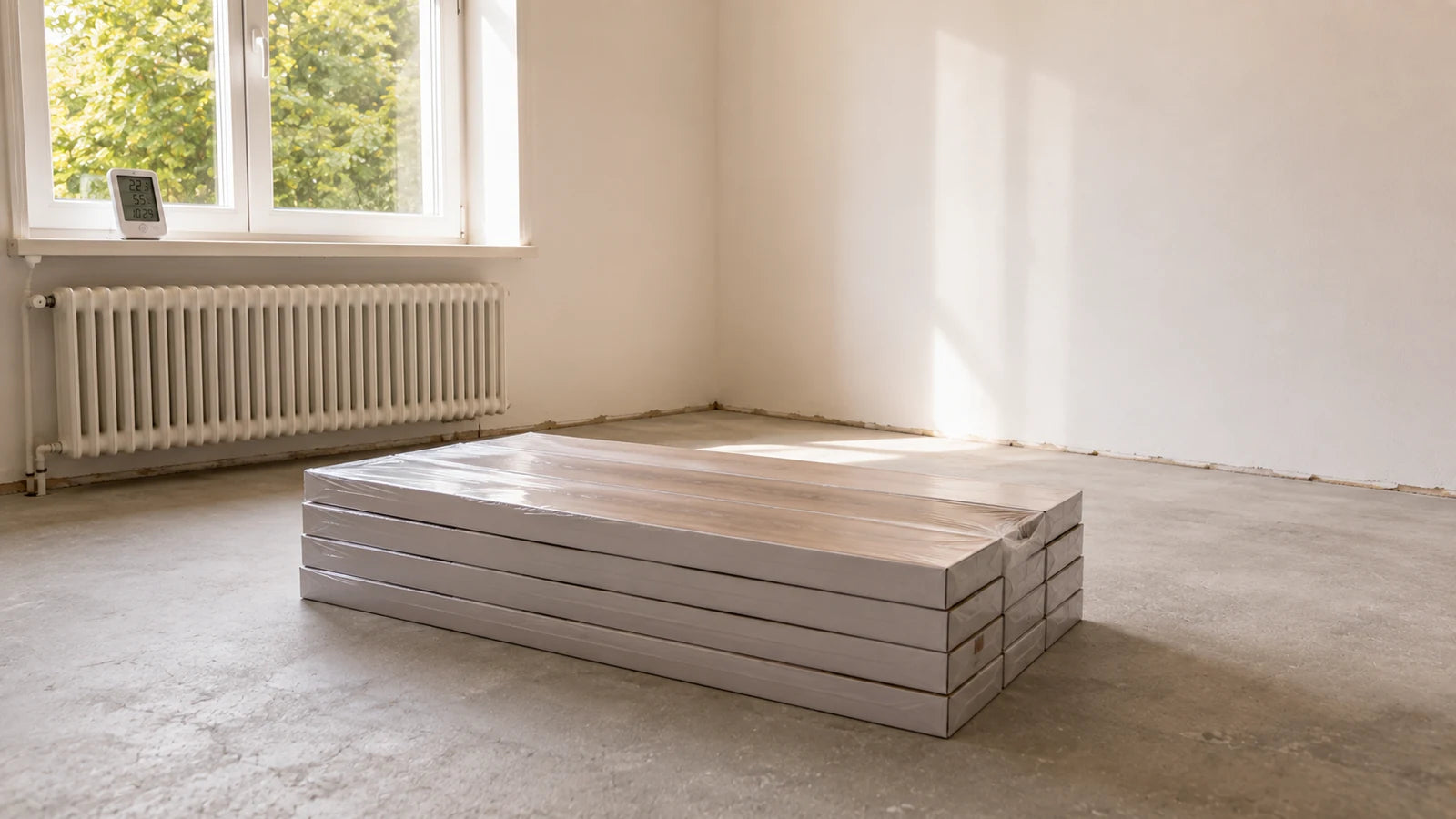
Acclimating vinyl flooring is the step many people overlook during renovations, yet it is one of the factors that determines whether your new floor will lie flat and gap-free later on. Why does vinyl flooring need to rest at all before you install it? It's simple: the material reacts to the temperature and humidity in the room and needs to adjust to those exact conditions before it is permanently installed.
Key takeaways
- Vinyl flooring should sit in the installation room for at least 24 to 48 hours before you begin.
- The ideal room temperature for acclimation is about 18 to 24 degrees Celsius.
- Both click vinyl and glue-down vinyl benefit from resting in the room, not just loosely laid floors.
- If the flooring is not acclimated, there is a risk of gaps forming, buckling, or the click joints popping out.
- It is best to store planks stacked flat or at a slight angle; never store them directly on cold screed.
Table of Contents
- Why acclimating vinyl flooring is important
- How long does vinyl flooring need to acclimate?
- What is the best temperature and humidity for the process?
- Storing vinyl flooring correctly before installation
- Does this also apply to click vinyl and glue-down vinyl?
- Typical mistakes during acclimation
- Checklist before installation
- Frequently asked questions
- Conclusion
Why acclimating vinyl flooring is important
Vinyl is a synthetic material, and like any plastic, it expands slightly in heat and contracts somewhat in the cold. If you take a pallet of planks straight from a cold warehouse or delivery van and install them immediately, the material has not yet reached the temperature and humidity levels that will be permanently maintained in the room. The result: after installation, the floor continues to expand, which leads to tension between the planks. Letting vinyl flooring acclimate gives the material time to adjust to the room conditions before the connection between the planks is locked in.
How long does vinyl flooring need to acclimate?
As a rule of thumb, it should rest for at least 24 to 48 hours in an unpacked or slightly opened box, directly in the room where it will be installed. If there are larger temperature differences between the warehouse and the final room, such as after transport in winter, 48 to 72 hours is recommended. The following table provides rough guidelines for your reference.
| Situation | Recommended rest period | Note |
|---|---|---|
| Standard delivery, room temperature similar to warehouse | 24 to 48 hours | Open packaging slightly, do not remove completely |
| Winter delivery or cold transport | 48 to 72 hours | Heat the room to normal temperature beforehand |
| New building with fresh screed | Only acclimate after the screed has completely dried | Have moisture levels in the screed checked first |
What is the best temperature and humidity for the process?
Vinyl flooring acclimates most reliably at a room temperature of approximately 18 to 24 degrees Celsius and a relative humidity between 40 and 65 percent, which corresponds to normal living conditions. It is important that these values remain relatively constant throughout the entire rest period and continue to be so after installation. Harsh heating air in winter or a room without heating in a shell construction are not good conditions; it is better to turn on the heating and climate control systems before the flooring arrives.
Storing vinyl flooring correctly before installation
Store boxes or pallets lying flat, not on their side, to prevent individual planks from warping. The surface should be dry and level; direct contact with cold screed or damp walls is detrimental. It is best to place the goods directly in the room where they will be installed so that they truly adapt to the conditions on-site rather than those of a hallway or garage. You should also avoid direct sunlight or proximity to radiators during the acclimation period.
Does this also apply to click vinyl and glue-down vinyl?
Yes, both types benefit from acclimation, even if the reasoning differs slightly. For click vinyl from our click vinyl collection, the rest period prevents the click joints from loosening or popping out due to subsequent expansion after installation. For glue-down vinyl from our glue-down vinyl collection, the adjustment ensures that the adhesive cures under realistic temperature conditions and that the plank does not subsequently exert tension on the adhesive layer. In both cases: always acclimate first, then install.
Typical mistakes during acclimation
The most common mistake is simply time pressure: the flooring is delivered and installed the same day because the contractor's deadline is already set. A second classic error is storage in the wrong room, such as an unheated basement, while completely different temperatures prevail in the living room upstairs. Furthermore, there is no need to completely remove the plastic film before the rest period, as it offers no advantage. By keeping these points in mind, you can avoid most problems that would otherwise only become visible weeks later as waves or gaps. You can find more information about common installation errors in our article Installing vinyl flooring: The 8 most common mistakes and how to avoid them.
Checklist before installation
- Store products in the target room for at least 24 to 48 hours; longer if the transport was cold.
- Bring the room temperature to 18–24°C and keep it stable.
- Store boxes flat; do not place on cold screed or in damp rooms.
- Check the screed beforehand to ensure it is sufficiently dry.
- Only open the packaging completely after the rest period and begin the installation.
If you are unsure whether your rooms offer the right conditions, or if you have no previous experience with installation, it is worth checking out our guide Installing vinyl flooring: do it yourself or hire a professional?
Frequently asked questions
Why does vinyl flooring have to be acclimated at all?
Because the material expands or contracts minimally depending on the temperature and humidity. Without a rest period, this adjustment happens after installation and can lead to tension between the planks.
How long does vinyl flooring need to acclimate?
As a rule, 24 to 48 hours in the installation room is sufficient. If there are large temperature differences compared to the previous storage location, it is better to plan for 48 to 72 hours.
Do I have to completely remove the packaging during the rest period?
No, you can slightly open the boxes to allow air to circulate. You only need to remove the packaging entirely shortly before the actual installation.
What happens if I don't let the vinyl flooring acclimate?
Gaps may open, planks may buckle, or with click vinyl, the connections may loosen over time. These issues often only appear days or weeks after installation.
Does acclimation also apply to underfloor heating?
Yes, it is particularly important in this case. The heating should already be in operation during the rest period so that the floor rests under realistic conditions and is not brought to operating temperature only after it has been installed.
Can I let the vinyl flooring acclimate outside or in the garage?
No, that does little to help, as the temperature and humidity values there usually differ from those in the target room. Always store the goods exactly where they will be installed.
Conclusion
Acclimating vinyl flooring only costs you a few days of patience, but in the worst-case scenario, it saves you from having to completely redo the work. Stick to the rule of thumb of 24 to 48 hours at room temperature, store the goods in the target room, and additionally check the moisture in the screed for new buildings. This ensures your new floor starts off under the right conditions from the very beginning.
Ready for your new vinyl floor?
Discover vinyl flooring nowWant to see the color and texture in person before ordering? Order a vinyl flooring sample and let that sample acclimate in the room briefly as well before making your final decision.